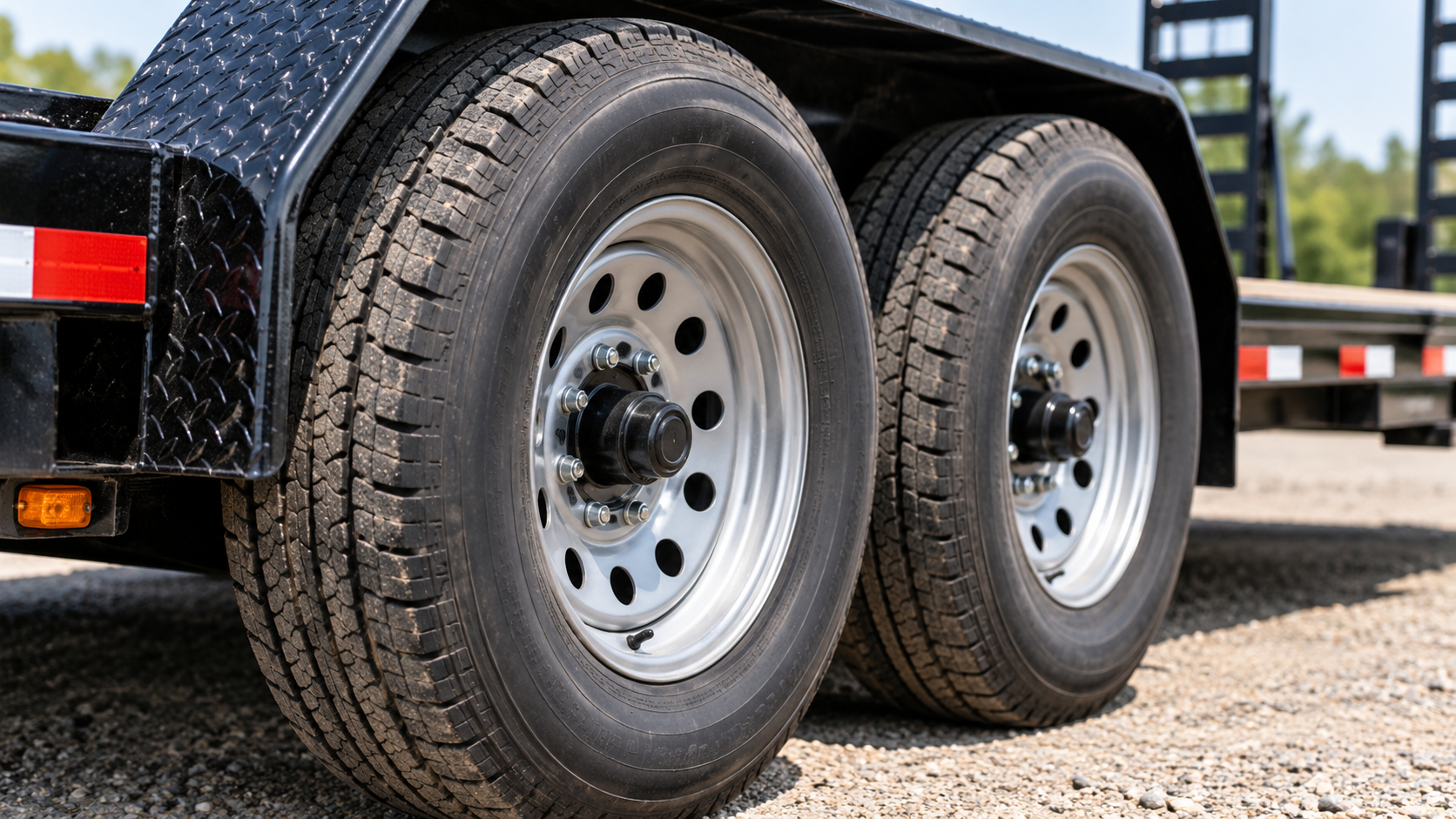
Choosing a trailer tire isn’t just about finding the right size. Load range, load capacity, inflation pressure, wheel rating, axle capacity, trailer GVWR, and how the trailer is actually used all matter. A tire with a higher load range isn’t automatically the best choice, and installing heavier-rated tires doesn’t increase what your trailer is legally or mechanically designed to carry.
What Does Trailer Tire Load Range Mean?
Load range is a tire rating that indicates the tire’s strength and the maximum load it can carry at a specified inflation pressure. You may still hear load ranges described by older “ply ratings,” such as 10-ply, 12-ply, or 14-ply, but modern tires do not necessarily contain that number of physical fabric plies. The load range is a rating—not a literal count of the tire’s internal plies.
Common Trailer Tire Load Ranges
Trailer tires are commonly available in Load Ranges C, D, E, F, and G, although the available ratings depend on the tire size and manufacturer. As the load range increases, the tire is generally designed to carry more weight at a higher maximum inflation pressure. However, the actual load capacity printed on the tire—not the load-range letter by itself—is what matters when determining whether a tire is suitable for your trailer.
For example, two tires of the same size and load range can have different published load capacities or maximum inflation pressures depending on their construction and manufacturer. Always check the specifications for the exact tire you are considering.
Load Range vs. Load Capacity
Load range and load capacity are related, but they are not the same thing. Load range describes a tire’s strength and inflation category, while load capacity tells you how much weight that specific tire is rated to support under specified conditions.
When choosing trailer tires, look at the maximum load rating molded into the tire sidewall and compare it with the weight the tires must actually support. Remember that the trailer’s axle ratings, wheel ratings, suspension, coupler, frame, and GVWR can still limit the trailer even if you install tires capable of carrying more weight.
How Much Tire Capacity Does Your Trailer Need?
Start with the trailer’s actual loaded weight and its GVWR. The tires need enough combined capacity to safely support the portion of the trailer’s weight carried by the axles. Some of the total trailer weight is carried by the tow vehicle through the tongue or gooseneck, but that does not mean you should choose tires with barely enough capacity for a calculated axle load.
Also check the GAWR (Gross Axle Weight Rating) listed on the trailer’s certification label. Tire capacity should be appropriate for the axle load, but installing higher-capacity tires does not increase the axle rating or the trailer’s GVWR. The lowest-rated component in the system can still determine the safe limit.
Understanding Tire Pressure and Load Capacity
A trailer tire’s maximum load rating is tied to a specified inflation pressure. If a tire is rated to carry a certain amount of weight at a particular PSI, you should not assume it can carry that same load when significantly underinflated. Proper inflation is especially important on trailers because excessive heat buildup from underinflation can contribute to tire failure.
At the same time, the maximum pressure shown on the tire does not override the limitations of the wheel. Before installing a higher-load-range tire that requires higher pressure, make sure the trailer’s wheels, valve stems, and other components are suitable for that pressure and application.
ST vs. LT Tires on Trailers
ST stands for Special Trailer. ST tires are specifically designed for trailer applications and are commonly used on utility, equipment, livestock, horse, travel, and other trailers. LT stands for Light Truck and is primarily a light-truck tire designation.
Don’t assume an LT tire is automatically better because it is designed for trucks, or that every ST tire is appropriate simply because it says “trailer” on the sidewall. Tire size, load capacity, speed rating, inflation requirements, wheel compatibility, manufacturer specifications, and the trailer manufacturer’s requirements all need to be considered.
What Does “12-Ply” Actually Mean?
Terms such as 10-ply, 12-ply, and 14-ply are commonly used when describing trailer tires, but they refer to ply ratings rather than the actual number of physical plies inside a modern tire. For example, a tire marketed as “12-ply rated” is generally referring to Load Range F, not a tire literally constructed with twelve layers of cord.
This is why it is better to compare the actual specifications of the tire instead of shopping by ply rating alone. Check the tire’s load capacity, required inflation pressure, speed rating, size, and intended application before deciding whether it is appropriate for your trailer.
Example: Choosing Tires for a Tandem-Axle Trailer
Suppose you have a tandem-axle trailer with a 9,995-pound GVWR and four tires. It would be a mistake to simply divide 9,995 by four and assume that 2,499 pounds of capacity per tire is automatically sufficient. Actual loading, side-to-side weight distribution, axle ratings, tongue weight, and the tire manufacturer’s specifications all need to be considered.
A trailer may also spend much of its life carrying less than its maximum rated weight. That does not mean tire capacity should be selected only for the load you normally carry. The tires still need to be appropriate for the trailer, its rated capacities, and its intended use.
Having some appropriate tire-capacity margin can be useful, but installing extremely high-load-range tires does not make the trailer itself stronger. Axles, wheels, suspension, frame, coupler, and other components retain their original ratings.
Don’t Forget The Wheel Rating
Upgrading to a higher-load-range tire does not automatically mean the trailer’s existing wheels can handle the tire’s maximum inflation pressure or load. Wheels have their own ratings, and those ratings need to be considered when changing tire specifications.
Before moving to a tire that requires substantially higher inflation pressure, verify that the wheel and valve stem are rated appropriately. A tire capable of handling higher pressure does not increase the capacity of a wheel that has a lower rating.
Speed Ratings Matter Too
Load capacity isn’t the only number worth checking on a trailer tire. The tire’s speed rating tells you the maximum speed for which the tire is rated under specified conditions. Different trailer tires—even in the same size and load range—can have different speed ratings.
Choose a tire with a speed rating appropriate for how the trailer will actually be used, and never treat that rating as a recommended travel speed. Trailer condition, load, road conditions, tow-vehicle capability, and applicable speed limits still determine how fast you should safely travel.
Common Trailer Tire Mistakes to Avoid
Buying by ply rating alone. Compare actual load capacity, inflation pressure, speed rating, and tire specifications.
Assuming a higher load range increases trailer capacity. Your trailer’s GVWR, axles, wheels, suspension, frame, and coupler still have their own limits.
Ignoring wheel and valve-stem ratings. Higher-pressure tires require compatible components.
Running tires underinflated. Insufficient pressure can increase heat buildup and reduce the tire’s ability to carry its rated load.
Overlooking tire age and condition. Tread depth isn’t the only consideration; inspect for cracking, damage, irregular wear, bulges, and other deterioration.
Ignoring load distribution. Total trailer weight doesn’t guarantee that every tire and axle is carrying an equal share of the load.
How to Choose the Right Trailer Tire
Start with the tire size specified for your trailer, then verify the load capacity, inflation requirements, speed rating, and intended application of the exact tire you’re considering. Compare those specifications with the trailer’s GVWR, GAWR, wheel ratings, and how the trailer will actually be loaded and used.
The goal isn’t simply to buy the tire with the highest load range. It’s to choose a properly rated tire that works with the rest of the trailer. Paying attention to the entire system—tires, wheels, axles, suspension, and actual load—is more useful than relying on a single number printed on the sidewall.
Before You Buy
Before purchasing replacement trailer tires, check the trailer’s certification label and the markings on the existing tires and wheels. Write down the tire size, GVWR, GAWR, wheel size, and current tire specifications. If you’re changing load range, tire size, or inflation pressure, verify compatibility rather than assuming the new tire is a direct replacement.
For the final word on load capacity, inflation, speed rating, and approved applications, use the specifications published by the tire manufacturer for the exact tire model and size. When trailer or component manufacturer requirements differ from general guidance, follow the requirements that apply to your specific equipment.