Why the Right Trailer Hitch Matters
Affiliate Disclosure: This article contains affiliate links. If you purchase through these links, TowGearGuide may earn a commission at no additional cost to you.
Learning how to choose a trailer hitch starts with understanding that a hitch is more than the connection between a truck and trailer. The hitch, receiver, ball mount, hitch ball, and related components all have weight ratings, and the towing setup is only as capable as its properly rated components. Choosing a hitch based only on whether it physically fits the receiver can lead to an improperly matched towing setup. Trailer weight, tongue weight, receiver rating, hitch class, ball size, and the tow vehicle’s ratings all need to be considered.
Understanding Trailer Hitch Classes
Receiver hitches are commonly grouped into classes based on their general size and weight-carrying capability. Classes range from light-duty receivers intended for small loads to heavy-duty receivers designed for larger trucks and trailers. A hitch class alone does not tell you exactly how much a particular vehicle can tow. Two receivers in the same general class can have different manufacturer ratings, and the tow vehicle itself may have a lower limit. Always use the ratings for the specific hitch and vehicle rather than assuming capacity from the class designation alone.
Common Receiver Sizes
Receiver opening size is one of the easiest hitch specifications to identify. Common sizes include 1¼-inch, 2-inch, 2½-inch, and 3-inch receivers. Two-inch receivers are widely used on pickups, SUVs, and other tow vehicles. Heavier-duty pickups may use 2½-inch or 3-inch receivers to accommodate equipment designed for higher towing loads. Adapters are available for using smaller hitch equipment in larger receivers, but an adapter does not increase the rating of the hitch component being installed. Every component still needs to be properly rated for the load.
Hitch Rating vs. Vehicle Towing Capacity
A hitch rating and a vehicle’s maximum towing capacity are not the same thing. A receiver may be rated for more weight than the truck is allowed to tow. Likewise, a truck may have substantial towing capability while a particular hitch, ball mount, or hitch ball has a lower rating. The safe working limit of the combination is determined by the applicable ratings of the components and vehicle. Never assume that installing a higher-rated hitch automatically increases the manufacturer’s towing rating for the truck. Hitch selection also needs to account for the weight the trailer places on the hitch. See our guide to trailer tongue weight and how much your trailer needs.
Gross Trailer Weight and Tongue Weight
Gross trailer weight is the actual weight of the loaded trailer. Tongue weight is the portion of that weight pressing downward on the hitch of a conventional trailer. Both matter when selecting towing equipment. A hitch may have separate ratings for maximum trailer weight and maximum tongue weight, and neither rating should be exceeded. Cargo placement can substantially affect tongue weight even when the trailer’s total weight remains the same. That is one reason proper loading and weight distribution are important parts of a towing setup.
Choosing the Correct Ball Mount
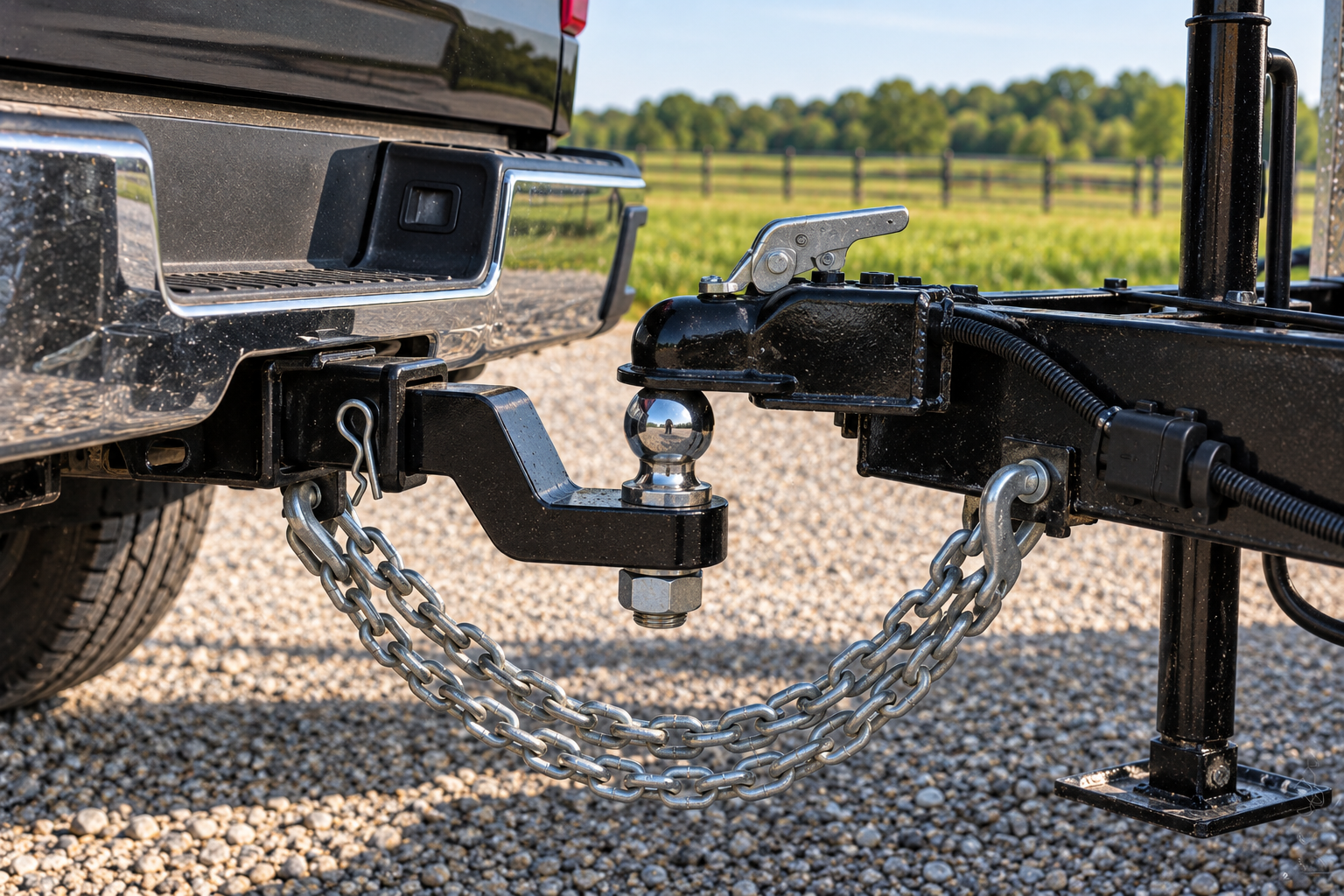
The ball mount connects the hitch ball to the receiver and needs to be rated appropriately for the trailer. It should also position the trailer reasonably level when connected to the loaded tow vehicle. A ball mount with too much rise or drop can leave the trailer noticeably nose-high or nose-low, affecting how the combination handles and how weight is distributed between the trailer axles. Adjustable ball mounts can be useful when one tow vehicle regularly pulls trailers with different coupler heights, but their weight ratings still need to be checked for the specific configuration being used.
Recommended Heavy-Duty Adjustable Ball Mount: The CURT 45902 Adjustable Dual-Ball Mount is a heavy-duty option for trucks equipped with a 2-1/2-inch receiver. It provides adjustable rise and drop and includes both 2-inch and 2-5/16-inch trailer balls. The 2-inch ball is rated up to 10,000 pounds, while the 2-5/16-inch ball is rated up to 20,000 pounds. Always stay within the lowest-rated component of the truck, receiver, ball mount, hitch ball, and trailer combination. Check the CURT 45902 Adjustable Dual-Ball Mount on Amazon
Hitch Ball Size and Rating
Common hitch-ball diameters include 1⅞ inches, 2 inches, and 2 5⁄16 inches. The ball must match the size specified for the trailer coupler. Size alone isn’t enough. Hitch balls also have weight ratings, and the ball’s shank diameter and length must be compatible with the ball mount. Never connect a trailer to a hitch ball of the wrong diameter simply because the coupler appears to latch onto it. Use the ball size marked for the coupler.
Weight-Carrying vs. Weight-Distribution Hitches
A conventional weight-carrying setup places the trailer’s tongue load directly on the ball mount and rear of the tow vehicle. A weight-distribution hitch uses spring bars and other components to redistribute some of the forces acting on the tow vehicle and trailer combination. These systems can be appropriate for certain heavier conventional trailers when permitted and properly configured for the vehicle, receiver, and trailer. Using a weight-distribution system does not override the ratings of the tow vehicle, trailer, receiver, tires, axles, or other components. Follow the requirements and limitations specified by the manufacturers involved.
Don’t Forget the Tow Vehicle’s Payload
Maximum trailer weight isn’t the only limit that matters. Tongue weight adds load to the tow vehicle and uses part of its available payload capacity. Passengers, tools, cargo, aftermarket equipment, and other items in the truck also consume payload. A combination can therefore be within a published trailer-weight limit while exceeding another vehicle rating. Check the vehicle’s certification label, owner’s information, hitch ratings, and other applicable manufacturer specifications when determining an appropriate towing setup.
Common Trailer Hitch Mistakes
Choosing a hitch by receiver size alone. Physical fit does not establish adequate weight capacity.
Assuming a heavier hitch increases truck towing capacity. The tow vehicle retains its manufacturer ratings.
Ignoring tongue weight. Hitch equipment can have separate trailer-weight and tongue-weight limits.
Using the wrong hitch ball size. The ball must correctly match the trailer coupler.
Ignoring ball-mount ratings. The receiver and hitch ball may be adequate while the ball mount is the limiting component.
Towing significantly nose-high or nose-low. Proper ball-mount rise or drop helps establish an appropriate trailer attitude.
Forgetting payload. Trailer tongue weight, passengers, cargo, and equipment all place load on the tow vehicle.
How to Choose the Right Hitch Setup
Start with the tow vehicle’s manufacturer ratings and the actual loaded weight of the trailer. Determine the trailer’s tongue weight and verify the ratings of the receiver, ball mount, hitch ball, coupler, and any weight-distribution equipment being used. Choose equipment that is compatible with the receiver and trailer and appropriately rated for the application. If you’re unsure about the actual trailer weight or tongue weight, weighing the loaded setup gives you better information than estimating. Before choosing a hitch, it also helps to understand the weight ratings that determine how much your trailer is designed to carry. See our guide to trailer GVWR vs. GAWR and what those ratings mean.
The Bottom Line
A properly matched hitch setup involves more than buying a receiver and hitch ball that fit together. Vehicle towing capacity, payload, trailer weight, tongue weight, receiver rating, ball-mount rating, hitch-ball rating, and trailer coupler specifications all matter. Treat the towing system as a complete combination. The goal is not simply to install the biggest hitch available—it’s to use equipment that is properly matched to the truck, trailer, and load.
1 thought on “How to Choose a Trailer Hitch: Receiver Classes, Weight Ratings & Towing Capacity”
Comments are closed.