Why Steering Play Matters
Excessive steering play can make a truck wander, require constant correction, and feel unstable on rough roads or at highway speeds. On older or high-mileage trucks, the cause is often wear in one or more steering or suspension components rather than a single obvious failure.
The best approach is to inspect the steering system methodically instead of replacing parts at random. Tie rods, drag links, track bars, ball joints, wheel bearings, steering shafts, steering boxes, and even alignment can contribute to loose or vague steering.
Start by Defining the Problem
Steering play can describe several different symptoms. The steering wheel may move before the front wheels respond, the truck may wander within the lane, the front end may shift when changing direction, or the steering may simply feel less precise than it once did.
Those symptoms can have different causes. Before buying parts, determine whether the looseness is occurring between the steering wheel and steering box, within the steering linkage, at the axle or suspension, or at the wheels themselves.
Inspect the Steering With a Helper
One useful inspection can be performed with the truck parked on a solid, level surface and the engine off. Have a helper move the steering wheel gently back and forth through the area of free play while you watch the steering components.
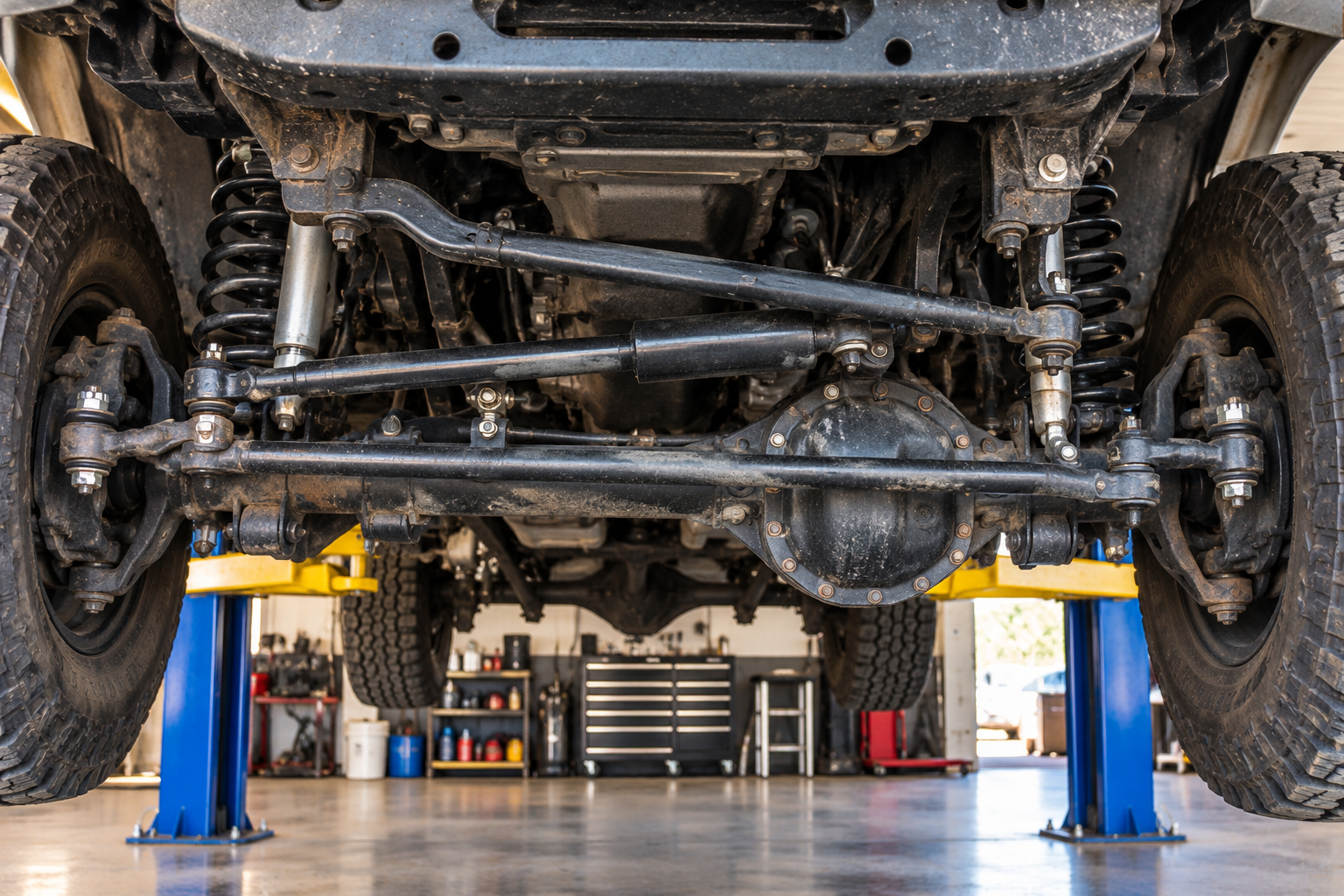
You’re looking for a component that moves before the part connected to it responds. Watch the steering shaft, steering-box output, drag link, tie rods, track bar, and their mounting points.
Keep your hands away from moving components while your helper moves the steering wheel.
Check the Tie Rods and Drag Link
Tie rods transfer steering movement to the wheels, while the drag link connects parts of the steering linkage depending on the truck’s steering design.
Worn ball-and-socket joints can introduce movement before the wheels respond. During inspection, watch each joint while a helper moves the steering wheel back and forth. Movement between the stud and socket, damaged boots, unusual looseness, or other signs of wear deserve closer inspection.
Don’t assume a joint is good simply because its dust boot still looks intact. Likewise, a damaged boot does not automatically prove that the joint itself has already developed excessive play.
Check the Track Bar on Solid-Axle Trucks
On many solid-front-axle trucks, the track bar locates the axle laterally under the vehicle. Wear in the track-bar joints, bushings, bolts, or mounting brackets can allow the axle to shift from side to side as the steering wheel is moved.
This movement can feel like steering-box play even when the steering box isn’t the primary problem.
Watch both ends of the track bar while a helper moves the steering wheel. The mounting brackets themselves should also be inspected for loose hardware, damaged bolt holes, cracks, or other movement.
Check Ball Joints and Wheel Bearings
Ball joints and wheel bearings can also contribute to poor steering feel, uneven tire wear, or front-end movement.
A common inspection involves safely raising and supporting the vehicle and checking the wheel for unwanted movement. The exact inspection procedure depends on the suspension and axle design, because movement detected at the wheel can come from different components.
Never work underneath a vehicle supported only by a jack. Use properly rated jack stands on a stable surface and follow the vehicle manufacturer’s lifting procedures.
Inspect the Intermediate Steering Shaft
The intermediate steering shaft connects the steering column to the steering gear on many trucks. Wear in its joints, splines, or slip mechanism can create free movement or a clunk that is felt directly through the steering wheel.
While a helper moves the steering wheel through the loose area, watch the shaft and its connections. If the steering wheel moves but the steering-gear input does not respond immediately, the shaft or its connections deserve closer inspection.
Check the Steering Box
A worn or improperly adjusted steering gear can create steering-wheel free play, but it should not automatically be blamed for every loose-steering complaint.
Before replacing or adjusting the steering box, inspect the components feeding movement into it and the linkage coming out of it. Loose mounting bolts, worn steering shafts, linkage wear, or track-bar movement can imitate steering-box problems.
Steering-gear adjustments should be approached carefully. Incorrect adjustment can cause binding, poor return-to-center behavior, accelerated wear, or unsafe steering.
Don’t Ignore Control-Arm Bushings
On trucks that locate a solid front axle with control arms, worn control-arm bushings can allow unwanted axle movement. This may contribute to vague handling, changes in alignment under load, clunks, or instability.
Inspect the bushings for deterioration, separation, excessive movement, and damaged mounting hardware. Replacing steering linkage alone won’t correct movement caused elsewhere in the suspension.
Tires and Tire Pressure Can Affect Steering Feel
Not every steering complaint comes from a worn steering component. Tire pressure, tire construction, tire size, uneven wear, and alignment can all affect how a truck tracks down the road.
Large or aggressive tires can change steering feel compared with factory-size highway tires. Incorrect inflation or uneven tire wear can also contribute to wandering or pulling.
Inspect the mechanical steering and suspension components first when actual looseness is present, but don’t overlook the tires when diagnosing overall handling.
Alignment Comes After Mechanical Problems Are Corrected
An alignment can improve handling when alignment angles are incorrect, but it cannot repair worn steering or suspension components.
If tie rods, ball joints, track-bar components, control-arm bushings, wheel bearings, or other parts have excessive movement, those problems should be corrected before relying on an alignment to solve the steering complaint.
Some steering or suspension repairs may also require an alignment afterward.
Common Mistakes When Diagnosing Steering Play
Replacing the steering box first. A steering box can wear, but linkage, track-bar, shaft, or suspension movement can produce similar symptoms.
Replacing parts without watching the system move. Having a helper work the steering wheel can reveal movement that isn’t obvious during a stationary visual inspection.
Ignoring mounting points. A good component attached to a loose or damaged bracket can still allow unwanted movement.
Assuming new parts are automatically good. New components can be installed incorrectly, hardware can loosen, and replacement parts can occasionally develop problems.
Trying to fix mechanical looseness with an alignment. Alignment settings cannot eliminate actual play in worn components.
Adjusting the steering box without diagnosing the rest of the system. Excessive adjustment can create additional steering problems.
A Practical Inspection Order
When diagnosing excessive steering play, start at the steering wheel and follow the system toward the tires. Check the steering column and intermediate shaft, steering-box input and output, drag link, tie rods, track bar, ball joints, wheel bearings, suspension mounting points, tires, and alignment-related components.
Watching the system operate is often more informative than simply grabbing individual parts. The goal is to find where movement begins without producing the movement that should follow it.
The Bottom Line
Loose steering is often the combined result of wear in several components, particularly on older or high-mileage trucks. Replacing one part may improve the steering without eliminating all of the play.
Inspect the system methodically, correct confirmed mechanical problems, verify that fasteners are properly installed and tightened to the appropriate manufacturer specifications, and address alignment after worn components have been repaired. That approach is more effective than replacing expensive parts based on guesswork.