Why Jack Capacity Matters
Affiliate Disclosure: This article contains affiliate links. If you purchase through these links, TowGearGuide may earn a commission at no additional cost to you.
Floor jacks and jack stands are basic equipment for anyone who works on trucks, trailers, or other heavy vehicles. But choosing them based only on a large tonnage number printed on the box can be misleading. Capacity matters, but so do lift height, stability, construction, lifting points, vehicle weight distribution, and the capacity of the jack stands that will actually support the vehicle while you work. Most importantly, a floor jack is primarily a lifting device. It should not be treated as the sole support for a vehicle while someone is underneath it.
What Does a 3-Ton Floor Jack Rating Mean?
A 3-ton floor jack has a rated lifting capacity of 6,000 pounds when used according to the manufacturer’s specifications. That doesn’t necessarily mean the jack must lift an entire 6,000-pound truck at once. When you raise one end or one corner of a vehicle, the jack normally lifts only a portion of the vehicle’s total weight. However, vehicle weight isn’t always distributed evenly between the front and rear axles. A diesel pickup, for example, may carry substantial weight over the front axle. That is why actual vehicle and axle weights are more useful than simply comparing the jack rating with the vehicle’s advertised curb weight.
Capacity Is Only One Part of Choosing a Floor Jack
A jack can have plenty of rated capacity and still be a poor choice for a particular truck.
Consider:
- Rated lifting capacity
- Maximum lift height
- Minimum saddle height
- Overall stability
- Saddle size
- Chassis length and width
- Vehicle ground clearance
- Manufacturer-approved lifting points
- Weight of the jack itself
- Intended working environment
For trucks, maximum lift height can be particularly important.
Why Lift Height Matters on Trucks
A floor jack designed primarily for passenger cars may have enough weight capacity to lift part of a pickup but still lack enough height to raise the truck sufficiently. This becomes more noticeable with four-wheel-drive trucks, larger tires, lifted suspensions, and vehicles with substantial suspension travel. Remember that the suspension may extend as the frame is lifted. The jack may therefore have to travel considerably farther than expected before the tire actually leaves the ground. Check the jack’s maximum height before buying it.
Low-Profile vs. High-Lift Floor Jacks
Low-profile jacks are designed to fit underneath vehicles with limited ground clearance. They are useful for cars and lowered vehicles, but low minimum height doesn’t necessarily provide an advantage when working primarily on pickups. For truck use, maximum lift height may be more important. Some floor jacks combine a relatively low entry height with a long lifting range, while others are specifically designed for trucks or SUVs. Choose based on the vehicles you actually service.
Is a 3-Ton Jack Enough for a Full-Size Pickup?
For many common maintenance jobs on full-size pickups, a quality 3-ton floor jack may provide sufficient lifting capacity when it is lifting only part of the vehicle and is used within its rating. But don’t make that decision from the words “3 ton” alone. Check the vehicle’s GVWR, actual axle weights when available, the location being lifted, and the jack manufacturer’s instructions. Heavier commercial trucks, heavily loaded pickups, or certain lifting arrangements may require greater capacity. A higher-capacity jack can also provide additional capacity margin, although it may be larger, heavier, and more expensive.
Recommended Floor Jack: The ARCAN A20019 3-Ton Aluminum Floor Jack is a strong option for truck and automotive work when its 6,000-lb rated capacity and lifting range are appropriate for the vehicle. Its aluminum construction keeps the jack lighter than many comparable steel models, while the dual-piston design provides quicker lifting. Check the ARCAN A20019 3-Ton Aluminum Floor Jack on Amazon.https://amzn.to/4gzjnO0
Understanding Jack Stand Ratings
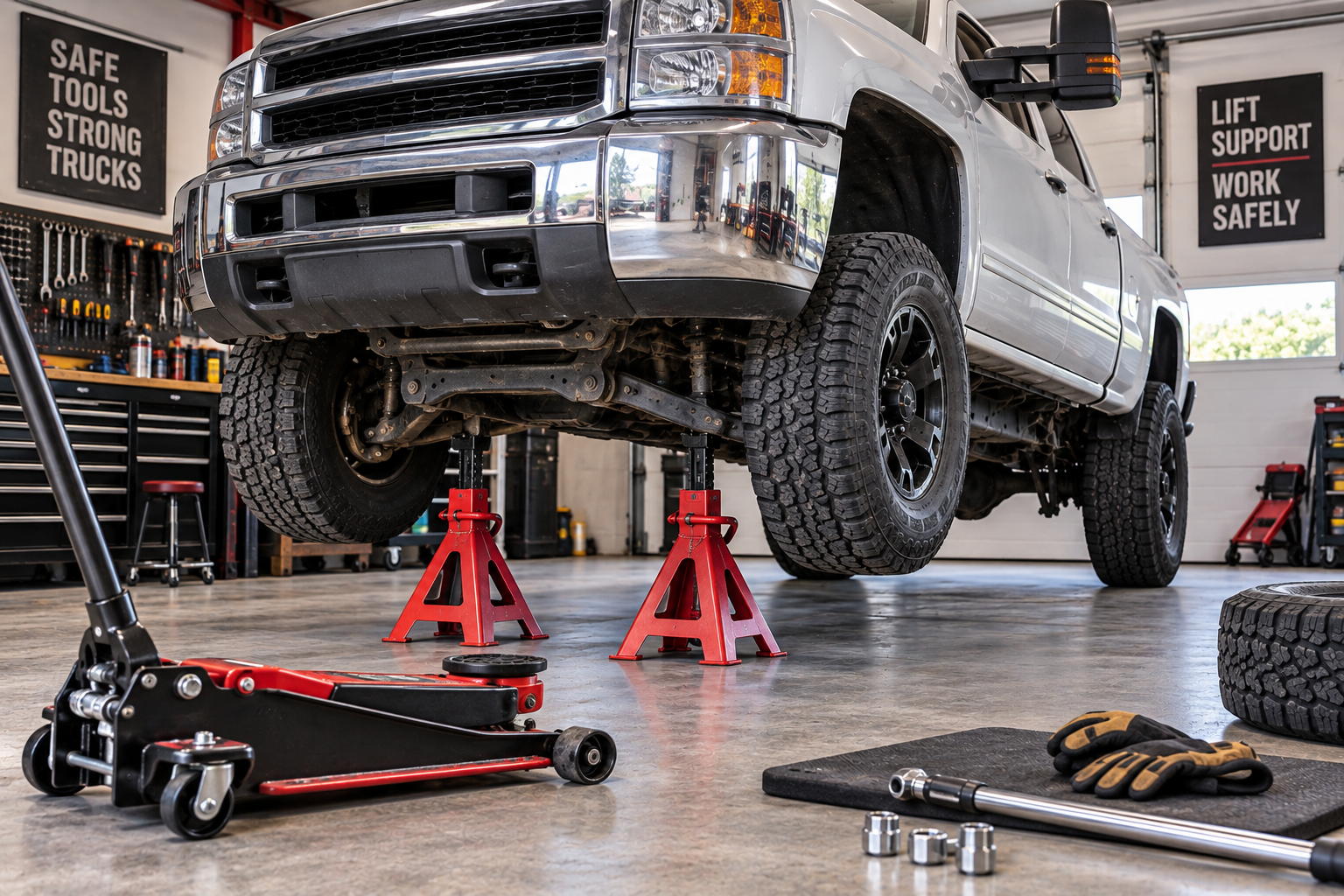
Jack stands support the vehicle after it has been raised. Their rating must be understood correctly. Depending on the manufacturer and applicable standard, a capacity marking may refer to a pair of stands rather than each individual stand. Never assume that two stands each support the full capacity printed on the packaging. Read the manufacturer’s instructions and labeling for the exact set you’re using.
Don’t Confuse Jack Capacity With Jack Stand Capacity
The floor jack and jack stands perform different jobs. The jack must safely raise the load. The stands must safely support the load at the locations where they are placed. A high-capacity floor jack does not compensate for undersized jack stands. Likewise, heavy-duty stands don’t make an overloaded floor jack safe. Each piece of equipment needs adequate capacity for the job it performs.
Recommended Jack Stands: The Pro-Lift T-6906D Heavy-Duty Jack Stands are rated at 6 tons per pair and use a ratcheting height adjustment with an additional locking pin. That combination makes them a strong choice for supporting many trucks, SUVs, and other heavier vehicles when used within their rated capacity and at the manufacturer-approved support points. Check the Pro-Lift 6-Ton Double-Locking Jack Stands on Amazon.
Use the Correct Lifting Points
Vehicle manufacturers specify appropriate lifting and support locations. Using the wrong point can damage the vehicle or create an unstable lifting situation. Depending on the truck, approved locations may involve the axle, frame, designated jacking points, or other reinforced areas. Never assume that a convenient-looking piece of metal underneath the truck is designed to support its weight. Consult the owner’s manual or reliable service information for the specific vehicle.
Floor Surface Is Part of the Safety Equation
A floor jack works best on a hard, level, stable surface. Concrete is generally far more appropriate than soft soil, loose gravel, or uneven ground. A floor jack moves slightly as its lifting arm rises. Its wheels need to be able to move as designed rather than becoming trapped or sinking into the surface. Jack stands also need stable footing. A stand that tilts, sinks, or sits on an unstable surface can become dangerous regardless of its rated capacity.
Never Rely on a Hydraulic Jack Alone
Hydraulic equipment can fail. A valve can leak, a seal can fail, the jack can move, or the vehicle can shift. Once the vehicle has been raised, place properly rated jack stands at appropriate support points before working underneath it. Lower the vehicle carefully onto the stands and verify that it is stable. The jack may sometimes be left positioned as an additional precaution when appropriate, but it should not replace properly positioned stands.
Wheel Chocks Matter
Lifting one end of a vehicle can change how securely the remaining tires hold the vehicle in place. Use appropriate wheel chocks according to the lifting procedure. The parking brake and transmission position alone should not always be treated as sufficient protection against movement. This is especially important when raising the rear of a vehicle because the parking brake normally acts through the rear wheels on many vehicles. Follow the manufacturer’s recommended lifting and securing procedure.
Choosing Jack Stands for a Truck
For truck use, stand height is just as important as capacity. A stand designed for a low passenger car may not extend high enough to reach an appropriate frame or axle support point after the truck is raised.
Look at:
- Minimum height
- Maximum height
- Rated capacity
- Base dimensions
- Locking mechanism
- Saddle shape
- Construction
- Manufacturer instructions
The stands should reach the required support points without being extended beyond their rated operating range. Safe lifting and support are especially important during front-end repairs. If you’re troubleshooting looseness in the steering, see our guide to common causes of truck steering play and what to check first.
Ratcheting vs. Pin-Style Jack Stands
Ratcheting jack stands use a toothed center column and locking mechanism that allows quick height adjustment. Pin-style stands use a physical pin inserted through aligned holes to establish the support height. Both designs can be suitable when properly engineered, rated, maintained, and used. Rather than assuming one mechanism is automatically safe because of its style, buy reputable equipment, inspect it before use, and follow the manufacturer’s instructions.
Inspect Your Jack Before Using It
Before lifting a vehicle, inspect the floor jack.
Look for:
- Hydraulic leaks
- Damaged wheels or casters
- Bent or cracked components
- A damaged saddle
- Loose or missing hardware
- Abnormal operation
- Difficulty holding a load
If the jack isn’t operating correctly, don’t rely on it simply because it worked the last time you used it.
Inspect Jack Stands Too
Jack stands are simple, but they still require inspection. Look for cracks, bent components, damaged welds, corrosion, missing pins, damaged locking mechanisms, or deformation. Make sure the saddle and base are in good condition. Do not modify a jack stand or improvise replacement locking components.
Know the Truck’s Weight
The driver’s-door certification label provides useful vehicle weight ratings, including GVWR and axle ratings on many vehicles. Actual scale weights provide even better information about how the particular truck is loaded. Accessories can add substantial weight. Toolboxes, auxiliary fuel tanks, bumpers, winches, service bodies, cargo, towing equipment, and other modifications can make a working truck significantly heavier than an empty factory configuration.
Don’t Forget About Loaded Trucks
If possible, remove unnecessary cargo before lifting a truck. A pickup loaded with tools, equipment, or materials can place considerably more weight on the lifting and supporting equipment than the same truck when empty. If the vehicle must be serviced while loaded, account for that weight when selecting and positioning lifting equipment. Never exceed the jack, stand, vehicle, or lifting-point limitations.
Lifting by the Axle vs. Lifting by the Frame
The correct lifting location depends on the vehicle and the work being performed. Lifting a solid axle can require less jack travel to raise a tire because the suspension doesn’t extend in the same way it may when the frame is lifted. However, some repairs require the axle or suspension to hang freely, making frame support necessary. Use the vehicle manufacturer’s approved lifting and support points for the particular procedure.
Why a Bigger Jack Can Be Useful
A 4-ton jack isn’t automatically safer than a properly used 3-ton jack, but additional capacity can be useful for heavier vehicles. Larger jacks may also offer broader chassis designs, larger saddles, or greater lifting ranges. The tradeoff is that heavy-duty jacks can be extremely heavy and less convenient to move or transport. For a home shop that regularly services full-size pickups, capacity and lift range may be more important than portability.
Aluminum vs. Steel Floor Jacks
Steel floor jacks are common, durable, and often relatively affordable, but larger models can be very heavy. Aluminum or aluminum-hybrid jacks can reduce weight, which may be valuable if the jack needs to be transported frequently. Material alone does not determine whether a jack is good or bad. Rated capacity, construction quality, stability, lifting range, serviceability, and manufacturer support are more useful considerations. Many jobs performed with a truck on jack stands also require fasteners to be tightened to a specific torque. See our comparison of click, split-beam, and digital torque wrenches.
Can You Use Wood Blocks to Gain Height?
Improvised lifting arrangements can introduce instability. Do not stack loose pieces of wood, bricks, concrete blocks, or other improvised materials under a jack or jack stand simply to gain height. Use equipment designed to provide the necessary lifting and support range. If the jack cannot safely reach the required lifting point, a jack with greater lift range or another manufacturer-approved lifting method is the better solution.
Common Floor Jack and Jack Stand Mistakes
Working under a vehicle supported only by a hydraulic jack. Use properly rated stands at approved support points.
Buying based only on tonnage. Lift height, stability, and support range matter too.
Assuming a stand’s printed capacity applies to each stand. Verify how the manufacturer rates the set.
Using unstable ground. Soft, sloped, or uneven surfaces can compromise otherwise adequate equipment.
Ignoring wheel chocks. Preventing vehicle movement is part of the lifting procedure.
Using an incorrect lifting point. This can damage the vehicle or create an unstable load.
Overextending equipment. Stay within the jack and stand manufacturers’ operating ranges.
Using damaged equipment. Bent, cracked, leaking, or malfunctioning lifting equipment should not be trusted.
Assuming an empty-truck weight applies to a loaded work truck. Cargo and accessories can substantially increase actual weight.
What Capacity Should You Buy?
There is no single capacity that is correct for every pickup.
For many owners of half-ton and heavy-duty pickups, a quality 3-ton or greater floor jack is a practical starting point, provided its actual rated capacity and lifting range are appropriate for the vehicle and lifting procedure. Heavier trucks or specialized applications may justify a 4-ton or higher-capacity jack.
Jack stands should likewise be selected based on the actual supported load, required height, manufacturer’s rating method, and the vehicle’s approved support locations. Buying extra capacity can provide useful margin, but capacity does not replace correct lifting technique.
The Bottom Line
Choosing a floor jack and jack stands for a truck requires more than comparing tonnage ratings. You need enough capacity, lift height, stability, and support range for the vehicle and the work being performed. Use manufacturer-approved lifting and support points, work on a hard and level surface, secure the vehicle against movement, inspect your equipment, and never crawl underneath a vehicle supported only by a hydraulic jack. A good floor jack gets the truck into the air. Properly rated and correctly positioned jack stands are what keep it safely supported while you work.