Why Trailer Wheel Bearings Matter
Trailer wheel bearings are easy to overlook because most of their work happens out of sight inside the hub.
But those relatively small components carry substantial loads while allowing the wheels to rotate with minimal friction. If a bearing loses lubrication, becomes contaminated, is incorrectly adjusted, or begins to fail, the result can range from excessive wheel play to serious hub and spindle damage.
Regular inspection and proper maintenance can help identify problems before they become roadside failures.
How Trailer Wheel Bearings Work
Many conventional trailer hubs use tapered roller bearings.
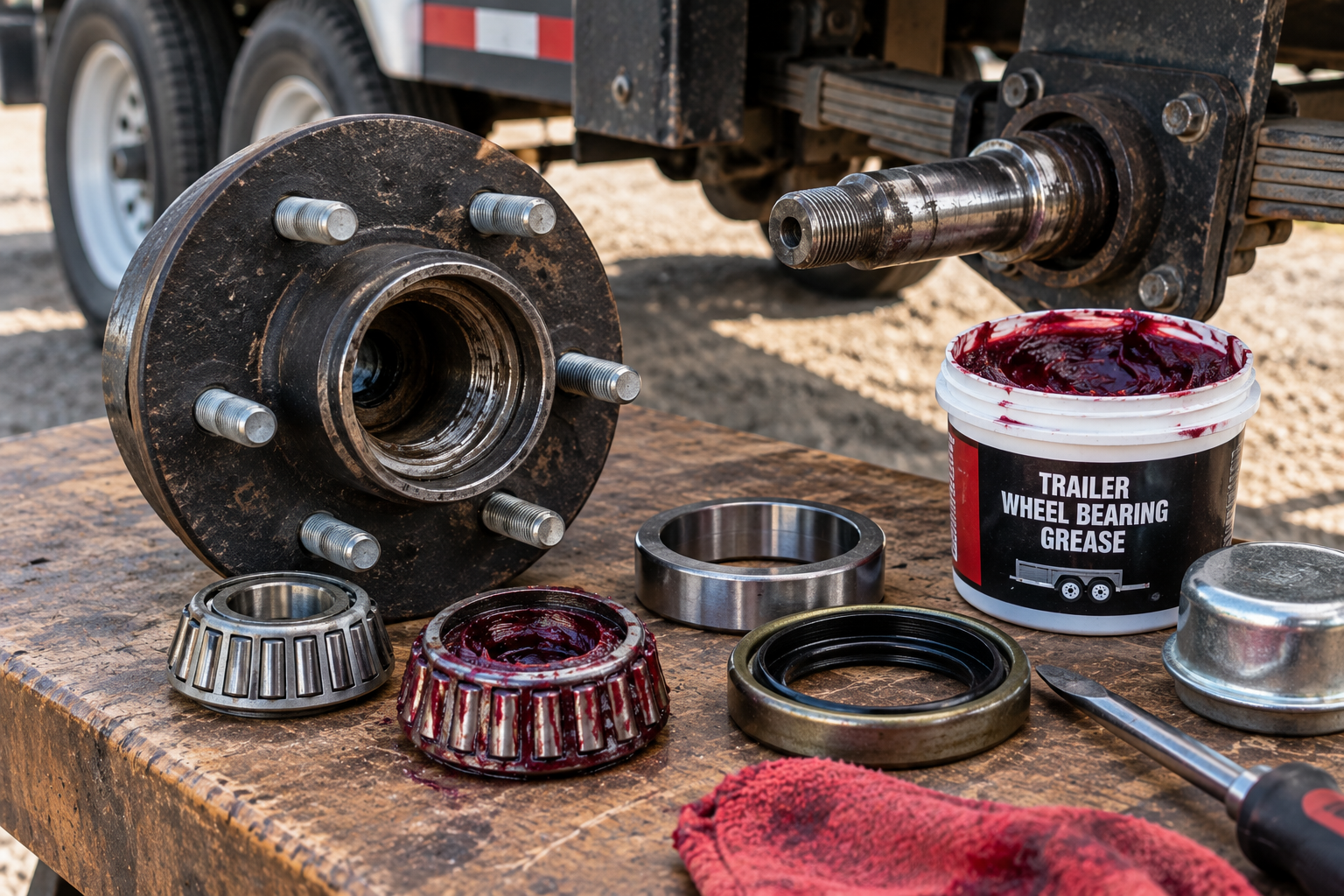
A typical hub contains an inner bearing and an outer bearing riding on the trailer spindle. Grease lubricates the bearings, while a seal at the back of the hub helps retain grease and keep contaminants out.
The bearings, races, spindle, seal, retaining hardware, and hub all work together.
A problem with one component can damage the others.
Common Signs of Trailer Wheel Bearing Problems
Possible symptoms of a bearing or hub problem include:
- Excessive wheel movement or looseness
- Grinding, growling, or rumbling noises
- A hub that becomes unusually hot
- Grease leaking from the hub or appearing on the inside of the wheel
- Damaged or leaking grease seals
- Roughness when rotating the wheel
- Visible metal particles in the grease
- Uneven or abnormal bearing wear
- Discoloration or heat damage on bearing components
- Damage to the spindle or bearing races
Not every warm hub or unusual noise automatically means a bearing has failed, but either deserves investigation.
Check for Wheel Play
One basic inspection involves safely raising the trailer so the wheel is off the ground.
With the trailer properly supported, check the wheel for unusual movement and rotate it by hand.
The exact amount of acceptable bearing end play depends on the axle and hub design, so don’t assume that every detectable movement means the bearing is bad—or that a loose wheel is normal.
If there is excessive movement, determine whether it comes from bearing adjustment, worn bearings, damaged races, spindle wear, or another component.
Never work beneath or around a trailer supported only by a jack. Use properly rated supports on a stable surface.
Listen and Feel While Rotating the Wheel
A healthy hub should generally rotate smoothly.
Grinding, roughness, catching, or other abnormal sensations can indicate a problem inside the hub.
Remember that brake components may create some resistance or sound, particularly on trailers equipped with electric or hydraulic brakes.
The goal is to distinguish normal brake contact from roughness originating in the bearings or hub.
If you’re uncertain, removing and inspecting the hub may be necessary.
Hub Temperature Can Provide Useful Information
Checking hub temperature during a trip can sometimes reveal a developing problem.
If one hub is substantially hotter than the others, it deserves attention.
However, hub temperature can also be affected by braking. A dragging or heavily used brake can create significant heat even when the wheel bearings themselves are properly lubricated.
That means a hot hub should be treated as a warning sign rather than an automatic diagnosis of bearing failure.
Compare Hubs on the Same Trailer
One of the easiest roadside checks is comparing similar hubs.
After towing for a period of time, safely stop and compare the temperatures of the hubs on the trailer.
An infrared thermometer can make comparisons easier without requiring direct contact with a hot hub.
If three hubs are relatively similar and one is dramatically hotter, investigate the unusual hub before continuing a long trip.
Be careful around wheels, brakes, and hubs because components may be hot enough to cause burns.
Grease Is Critical
Wheel-bearing grease creates a lubricating film between the bearing rollers and races.
Without adequate lubrication, friction and temperature can rise quickly.
Use grease that meets the specifications required by the axle, hub, or bearing manufacturer. Don’t assume every grease is interchangeable simply because it is marketed for automotive use.
Compatibility can matter when mixing different grease formulations.
When changing grease types, follow the component or lubricant manufacturer’s recommendations.
More Grease Isn’t Always Better
A common misconception is that a hub should simply be filled with as much grease as possible.
Some trailer axle systems have lubrication features designed to route grease through the spindle or hub, but those systems must be used according to the manufacturer’s instructions.
Excessive grease pressure can potentially force grease past a seal.
On trailers with brakes, grease contamination on braking surfaces can create an additional problem.
Understand the lubrication system on your particular axle before pumping grease into it.
Grease Fittings Don’t Eliminate Inspection
Some trailer hubs or axles have grease fittings that make adding grease convenient.
That convenience does not mean the bearings never need to be inspected.
Adding fresh grease cannot repair a damaged bearing, worn race, deteriorated seal, or damaged spindle.
Periodic disassembly allows the components to be cleaned and inspected directly when required by the manufacturer’s maintenance schedule.
Inspect the Bearings and Races
When the hub is removed, clean and inspect the bearings according to appropriate service procedures.
Look for signs such as:
- Pitting
- Scoring
- Flaking
- Corrosion
- Discoloration from excessive heat
- Damaged rollers
- Cracks or other physical damage
- Uneven wear
The bearing races pressed into the hub should also be inspected.
Installing a new bearing against a damaged race is not a proper repair.
Inspect the Spindle
The spindle should also be examined when servicing the hub.
Look for scoring, discoloration, grooves, damaged threads, or other evidence of wear or overheating.
A bearing failure can damage the spindle severely enough that simply installing new bearings will not correct the problem.
If spindle damage is suspected, determine the appropriate repair using the axle manufacturer’s specifications or a qualified trailer repair professional.
Replace Damaged Grease Seals
The rear grease seal is an inexpensive component with an important job.
A damaged seal can allow grease to escape and contamination to enter the hub.
When a hub is removed for bearing service, inspect the seal carefully. Many service procedures call for replacing the seal rather than attempting to reuse it.
Use the correct seal for the spindle and hub combination.
Bearing Adjustment Matters
Tapered roller bearings require proper adjustment.
Too loose and the hub may have excessive movement.
Too tight and the bearings can generate excessive heat and wear.
The correct procedure varies by axle and hub manufacturer. It may involve tightening the spindle nut while rotating the hub, then backing the nut off and securing it according to a specified procedure.
Do not substitute a generic tightening method when the manufacturer’s instructions are available.
Never Treat the Spindle Nut Like a Lug Nut
The spindle nut is not simply tightened as hard as possible.
Its job includes establishing the correct bearing adjustment and retaining the hub.
Overtightening it can preload the bearings excessively and lead to overheating or premature failure.
Undertightening can allow excessive hub movement.
Follow the procedure for the specific axle.
How Often Should Trailer Bearings Be Repacked?
There is no single maintenance interval that applies to every trailer.
Service intervals depend on the axle manufacturer, trailer use, mileage, operating conditions, storage conditions, and hub design.
A trailer used frequently for long highway trips may have different maintenance needs from one used occasionally for short local trips.
Boat trailers that regularly expose hubs to water introduce another set of conditions.
Follow the axle or trailer manufacturer’s recommended inspection and lubrication schedule.
Trailers That Sit Still Still Need Attention
Low mileage doesn’t necessarily mean the wheel bearings can be ignored indefinitely.
Trailers often sit for long periods exposed to humidity, temperature changes, and condensation.
Seals can deteriorate, and corrosion can develop on internal components.
A trailer that has been parked for years may deserve a thorough inspection even if it accumulated very few miles during that time.
Bearing Problems Can Damage More Than the Bearing
Continuing to tow with a failing bearing can turn a relatively straightforward repair into a much larger one.
A severe failure can damage the hub, races, spindle, brake components, wheel, or axle.
In extreme cases, the hub and wheel can separate from the trailer.
Grinding noises, major looseness, smoke, severe heat, or obvious hub damage should never be ignored.
Don’t Forget the Trailer Brakes
When servicing wheel bearings on a trailer equipped with brakes, inspect the brake components while the hub or drum is removed.
Look for contamination, damaged wiring on electric brakes, worn friction material, damaged springs or hardware, and other visible problems.
If grease has reached the braking surfaces because of a failed seal, the brake assembly may require additional service.
Follow the brake manufacturer’s repair procedures.
Check Lug Nuts After Wheel Removal
Bearing service often requires removing the wheel.
When reinstalling it, tighten the lug nuts using the proper pattern and the torque specification for the trailer’s studs, wheels, and lug nuts.
Do not assume the tow vehicle’s lug-nut torque applies to the trailer.
If the wheel or trailer manufacturer specifies a re-torque procedure after installation, follow it.
Carrying Spare Bearing Parts
For trailers used on long trips or in remote areas, carrying appropriate spare parts can be useful.
Depending on the trailer, that might include a correctly matched bearing set, races, grease seal, cotter pin or other retaining hardware, grease, and basic tools.
Some owners carry a complete preassembled spare hub when practical.
Spare parts only help if they actually fit, so identify the axle, spindle, bearings, seals, and hub before buying emergency replacements.
Common Trailer Bearing Maintenance Mistakes
Ignoring the bearings because the trailer has low mileage. Age, moisture, and long storage periods can still affect components.
Pumping grease into a fitting and assuming maintenance is complete. Grease fittings do not eliminate the need for inspection when service is due.
Overfilling or using excessive grease pressure. This can contribute to seal problems on some systems.
Mixing incompatible grease without checking. Use lubricants appropriate for the axle and existing grease.
Overtightening the spindle nut. Tapered roller bearings require proper adjustment, not maximum tightness.
Installing new bearings against damaged races. Bearings and their mating surfaces must be inspected together.
Ignoring a damaged spindle. Severe bearing failure can damage components beyond the bearing itself.
Reusing a questionable grease seal. A failed seal can quickly undermine otherwise good bearing service.
Assuming every hot hub means a bad bearing. Brake problems can also generate significant heat.
A Practical Pre-Trip Bearing Check
Before a towing trip, look for grease leakage around the hubs and inside the wheels.
Check for obvious wheel looseness when appropriate, and pay attention to new noises while towing.
During longer trips, periodically inspect the trailer during safe stops. Look for grease leakage, unusual smells, smoke, or other signs of overheating.
Comparing hub temperatures can provide another useful warning of a developing problem.
These checks don’t replace scheduled bearing maintenance, but they may help catch trouble early.
The Bottom Line
Trailer wheel bearings deserve regular attention because a small lubrication or adjustment problem can eventually become a major failure.
Use the correct grease, follow the axle manufacturer’s maintenance and bearing-adjustment procedures, inspect bearings and races when service is required, replace damaged seals, and investigate unusual heat, noise, or wheel movement.
Most importantly, don’t assume that adding grease through a fitting means the entire hub is healthy.
Proper inspection is what tells you whether the bearings, races, seals, spindle, brakes, and hub are actually ready for the road.